
For frequent position transfers of bedridden elderly individuals, manual lifting is not only physically taxing but also carries slip and fall risks. Electric patient hoists deliver mechanical load-bearing and stable mobility, easing caregivers' workloads while boosting safety, making them a practical care solution for rehabilitation facilities and home care alike.
I. Why Manual Care Requires Electric Patient Lift Assistance
Manual transfer of bedridden seniors brings three prominent pain points:
1. Lumbar strain for caregivers: Frequent bending and heavy lifting lead to chronic occupational injuries.
2. Discomfort for the care recipient: Abrupt position shifts may trigger blood pressure fluctuations.
3. Risk of accidental falls: Unstable center of gravity during manual handling can cause slips.
Rehabilitation electric patient hoists feature an electric lifting system to enable smooth transfers, with slings or seat-style supports that evenly distribute pressure across contact points. Multi-functional electric patient lifts further integrate position adjustment capabilities, ideal for scenarios paired with rehabilitation training.
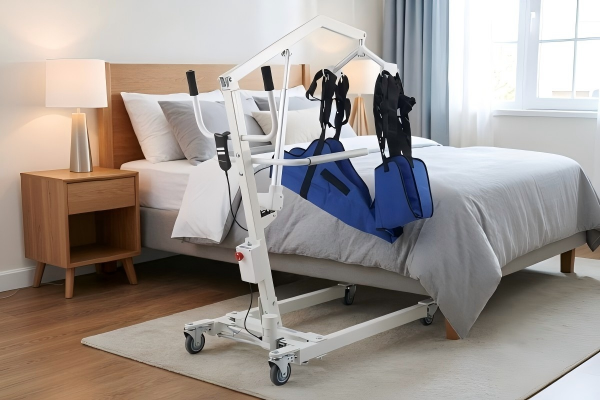
II. How Electric Patient Lifts Effectively Resolve Mobility Challenges for Bedridden Seniors
The patient hoist's performance hinges on three key functional dimensions:
1. Precision vertical lifting: Millimeter-level fine adjustment eliminates sudden jolts during elevation or lowering.
2. Smooth horizontal movement: Shock-absorbing tracks or wheel assemblies minimize jostling.
3. Safe load-bearing framework: Multi-point load distribution prevents overstress on single contact areas.
Electric patient hoists enable seamless transfers between beds, sofas, wheelchairs and commode chairs, perfectly suited for short-distance relocation tasks. Compared with hydraulic patient hoists, electric patient lifts demand far less physical effort and offer superior controllable movement speeds.
III. Matching the Right Patient Hoist to Different Care Scenarios
Select equipment based on core demands of your usage environment:
High-intensity Institutional Medical Settings
Opt for medical-grade electric patient lifts prioritizing easy sanitization and long-term durability. Models of this type adopt anti-corrosion materials with protective covers over all joint components.
Daily Home Care
Household patient hoists focus on compact dimensions and quiet operation. Foldable designs accommodate limited living spaces, and rubber casters prevent floor scratches.
Combined Rehabilitation Training
Care lifts with position adjustment functions support mid-transfer pauses to facilitate passive joint mobility exercises. Certain models even record transfer metrics for rehabilitation reference.
IV. Overlooked Safety Protocols for Daily Patient Lift Operation
Key operational reminders:
Routinely inspect sling stitching: Fabric components sustain the highest wear and tear.
Keep tracks clean: Dust buildup impairs wheel gliding performance.
Battery management: Not all units come with low-battery alert functionality.
Operational training: Caregivers must familiarize themselves with the response speed of the lift's remote controller.
When purchasing an patient hoist, prioritize your transfer frequency, available space and caregiver ease of use. Track-mounted full-featured lifts work best for medical institutions, while compact, user-friendly mobile lifts are the top choice for home care environments.