
Patient lifts are essential mobility aids for transferring individuals with full or partial loss of mobility. Hydraulic hoyer lift and electric patient lift are the two mainstream options. The key differences between them revolve around four dimensions: ease of operation, lifting experience, applicable scenarios, and budget. Choosing the right model not only reduces the caregiving burden but also ensures patient safety and comfort.
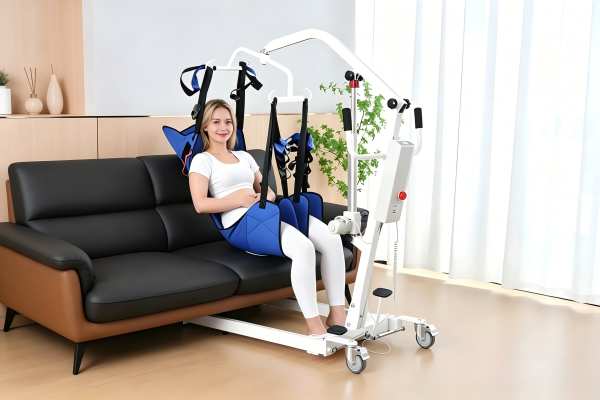
I. Key Differences & Selection Criteria
1. Operation Method & Physical Effort
Hydraulic hoyer lifts are operated via a manual lever or hydraulic pump. Lifting and lowering require continuous physical effort, placing certain demands on the caregiver's strength. Frequent, long-term use can lead to fatigue.
Electric patient lifts use rechargeable batteries + electric motors, operated by buttons or remote control. The entire process requires almost no effort, allowing a single caregiver to complete transfers with ease — especially ideal for female or elderly caregivers.
2. Lifting Smoothness & Safety
Hydraulic models tend to lift and lower slowly, and may produce a jerky feel when force is uneven, with slightly lower precision.
Electric models offer smooth, even lifting with precise height control. Most are equipped with emergency stop, overload protection, and other safety features, delivering a more comfortable experience for patients and reducing caregiving risks.
3. Applicable Scenarios & Usage Frequency
Hydraulic hoyer lifts have a simple structure and an affordable price, making them suitable for families or small care facilities with limited budgets and low usage frequency. They work well as a backup device.
Electric patient lifts offer high efficiency and strong adaptability, making them the first choice for hospitals, large nursing homes, and high-frequency home care. They are also convenient for shared use across multiple rooms.
4. Cost & Maintenance
| Hydraulic Hoyer Lift | Electric Patient Lift |
Price Range | Low | High |
Battery | None — no battery degradation | Requires regular charging; batteries have a lifespan |
Maintenance | Simple — periodic checks for hydraulic leaks | Slightly more involved, but better long-term value with frequent use |
II. Summary
Your Situation | Recommended Choice |
Limited budget, infrequent use | Hydraulic hoyer lift |
Prioritize ease, safety & efficiency; high-frequency care | Electric patient lift |
Tight space or need for portability | Electric foldable patient lift |
About CareAge
CareAge is a professional manufacturer deeply committed to the patient lift industry, with a comprehensive product lineup covering hydraulic, electric, and electric foldable series — designed for home, nursing home, and hospital scenarios alike.
We uphold strict quality control. Core components are EU CE certified, with a load capacity of up to 204 kg (450 lbs), ensuring stability and durability. We also offer customization services — adjusting parameters based on space dimensions, patient weight, and special care needs to deliver a tailored solution.
Over the years, CareAge has earned wide recognition from customers worldwide for our professional technology, reliable quality, and thoughtful service.
For product details or a customized solution, contact us anytime. We're here to make caregiving easier and safeguard every patient's safety and dignity.